
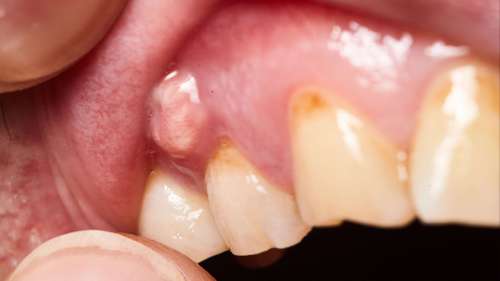
The dental fistula (also called an oral fistula or gum boil) is an abnormal channel that forms between an area of infection inside the jawbone or tooth root and the surface of your mouth, usually on the gums.
Essentially, it acts as a drainage pathway for the body to relieve pressure by letting pus and other fluids from a deep dental infection (called an abscess) escape into the mouth.
Key Facts About Dental Fistulas:
-
It's a Sign of an Infection: The fistula itself is not the disease; it is a symptom that signals a serious underlying infection (an abscess) that has been building up and needs an exit point.
-
Appearance: It typically looks like a small, red or yellow pimple or bump on the gums near the affected tooth, which may intermittently discharge pus, sometimes giving a foul taste in the mouth.
-
Lack of Pain: The fistula may not be painful because it allows the pressure from the abscess to be released.
However, the initial abscess that caused it is often very painful. -
Common Causes: The most common cause is a dental abscess at the root tip of a tooth, which is usually due to:
-
Untreated, deep tooth decay (cavities).
-
Dental trauma (injury or crack in the tooth).
-
Advanced gum disease (periodontitis).
-
Previous, unsuccessful dental work like a failed root canal.
-
Treatment
A dental fistula will not heal on its own because the source of the infection remains.
-
Root Canal Therapy: To remove the infected pulp from inside the tooth, clean the area, and seal it to save the tooth.
-
Tooth Extraction: If the tooth is too damaged to be saved.
-
Surgical Drainage: In some cases, to clean out a large abscess.
-
Antibiotics: May be prescribed if the infection has spread or the patient has a weakened immune system.
It is critical to see a dentist immediately if you suspect you have a dental fistula, as an untreated infection can spread and lead to more serious health issues.