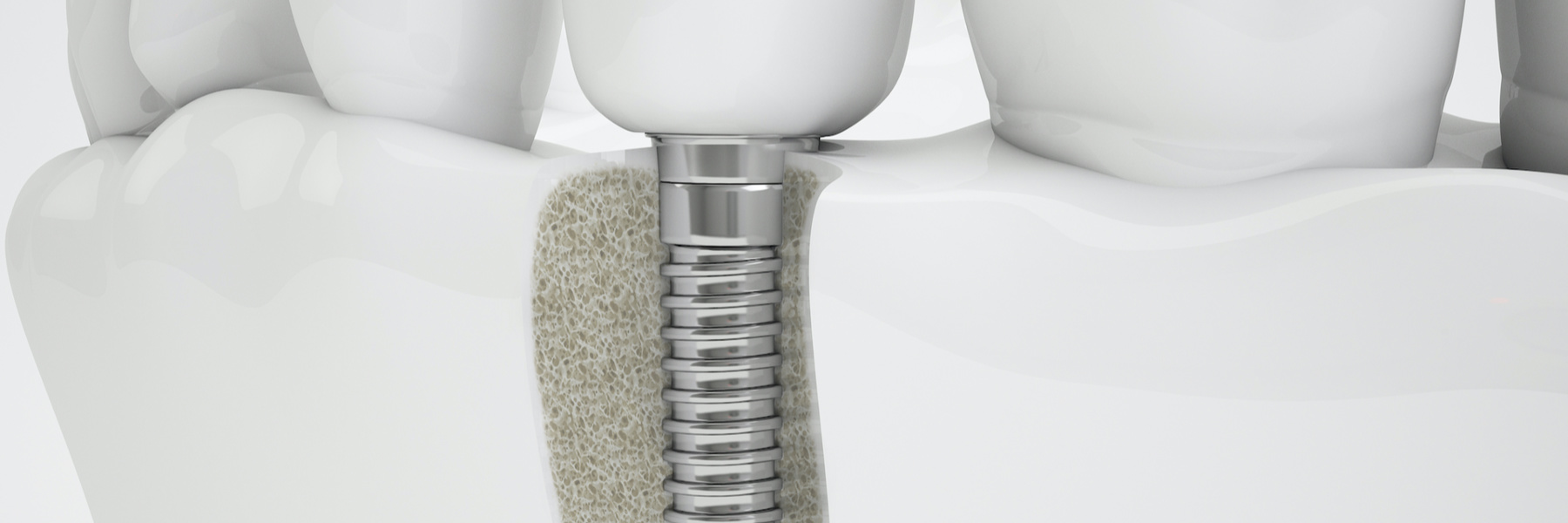

If you're considering dental implants in Uptown Houston, you may have heard your dentist mention a CBCT scan before treatment planning even begins. It's a small but important step that makes a real difference in how precisely your implant is placed.
Our 3-D imaging for dental implants, known as CBCT or cone beam computed tomography, captures a complete three-dimensional view of your teeth, jaw, and surrounding bone in a single scan, giving Dr. Shawki Abed and our team more detail than a traditional x-ray can provide.
What Does a CBCT Scan Show That a Regular X-Ray Can't?
A standard dental x-ray produces a flat, two-dimensional image. This is useful for identifying cavities and assessing root position, but offers limited insight into whether the bone structure can support an implant. A CBCT scan changes that entirely, capturing a full 3-D image of your teeth, jaw, and surrounding bone in one pass. This gives your dentist a complete picture of bone height, width, and density from every angle in a way that a simple x-ray cannot.
How Does CBCT Make Dental Implant Planning More Precise?
For implant placement specifically, this added dimension matters enormously. Dr. Abed can use 3-D scans to precisely account for nearby nerves, sinus cavities, and bone density in planning the ideal position, angle, and depth for an implant post.
Beyond implants, this same technology is also used to evaluate impacted wisdom teeth and diagnose more complex root canal cases. Essentially, CBCT can prove vital to any treatment plan requiring precise, three-dimensional detail.
Is a CBCT Scan Safe? What About Radiation?
It's a fair question, and the answer is reassuring. A CBCT scan uses significantly less radiation than a full medical CT scan, while still delivering highly detailed 3-D imaging for accurate implant planning. The scan itself is quick and comfortable, typically taking just a few minutes while you stand still, with no discomfort involved.
More precise planning upfront generally means a smoother procedure and a more predictable, long-lasting result. That’s the CBCT advantage!
Advanced Imaging for Effective Dental Implants in Uptown Houston
If you’re in Houston and considering dental implants to restore your smile and bite and want to understand how advanced technology informs a strong treatment plan, contact Dr. Shawki Abed and the friendly, knowledgeable Smiles Art Dentistry team at (713) 266-2265 to schedule a consultation.