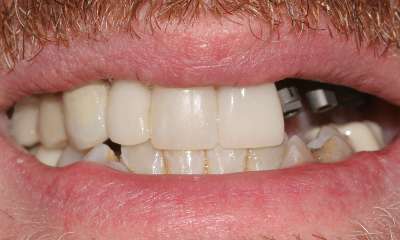
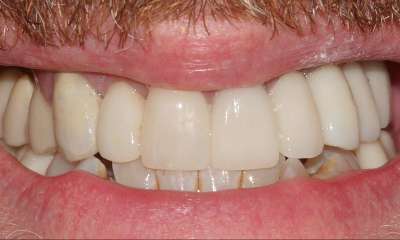
 At Smiles Art Dentistry, Dr. Shawki Abed offers dental implants, the premier solution for missing teeth. This innovative solution replaces an entire tooth, from root to crown. A dental implant provides unmatched stability, function, and natural appearance.
The Anatomy of a Dental Implant
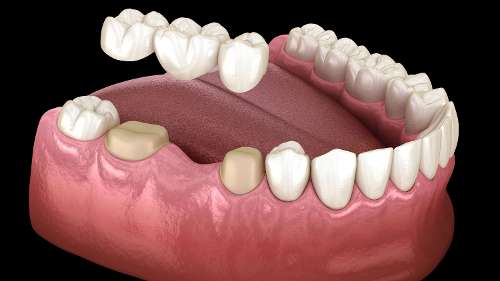
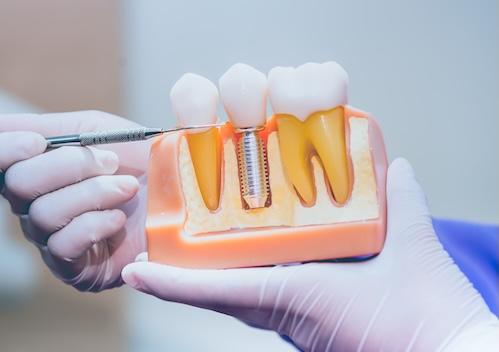
A complete implant restoration consists of three key components that work together to create a functional, aesthetic tooth replacement:
- Implant Post — This biocompatible titanium screw replaces the lost tooth root. Dr. Abed uses advanced technology to precisely plan and place the post in the jawbone during a procedure performed under local anesthesia. Over the next several months, the implant fuses with the jawbone through a process called osseointegration.
- Abutment—Once integration is complete, Dr. Abed attaches a connector piece called an abutment to the implant post. This piece is important because it secures the final restoration to the implant.
- Restoration — The final step of your smile transformation is to design and place a custom crown, bridge, or denture securely to the abutment. The result is a tooth replacement that looks and functions like the real thing.
What Kind of Denture Is Right For You?
Dentures are primarily categorized based on how many natural teeth remain and how the prosthesis is supported (tissue-borne vs. implant-retained/supported).
1. Full / Complete Dentures
Used when all natural teeth in an arch (upper, lower, or both) are missing.
- Conventional Complete Dentures: Fabricated and placed after extractions have healed and tissue shrinkage has stabilized (typically 8–12 weeks post-extraction). Rely on suction, surface tension, and tissue support.
- Immediate Dentures: Fabricated prior to extractions and delivered immediately after tooth removal. Acts as a surgical stent and prevents edentulous gaps, but requires routine tissue relines (temporary and permanent) as bone and soft tissues remodel.
2. Partial Dentures
Used when some natural teeth remain to serve as abutments, preserving existing dental structure while restoring function and preventing drift.
-
Cast Metal Framework (Removable Partial Denture - RPD): The standard durable option. Features a rigid Cobalt-Chromium or Titanium framework with retentive clasps resting on prepared natural teeth. Offers superior tissue support and minimal bulk.
-
Acrylic (Tissue-Borne) Partials / "Flippers": Made with a acrylic base and optional wrought-wire clasps. Generally used as temporary or transitional prostheses due to higher fracture risk and lower stability.
-
Flexible Partials (e.g., Valplast, Flexite): Made from a flexible nylon thermoplastic material. Metal-free and highly aesthetic with tooth-colored or tissue-colored clasps, though less rigid and harder to adjust or repair over time.
3. Implant-Supported & Implant-Retained Prostheses
Integrate dental implants (typically 2 to 6+ per arch) to significantly improve retention, stability, and load distribution.
-
Snap-On / Overdentures (Implant-Retained): Removable prostheses that snap onto locator attachments or a milled bar secured by 2–4 implants. The patient removes them daily for hygiene, but they eliminate tissue slippage and palatal coverage on uppers.
-
Fixed Hybrid Prostheses (e.g., All-on-4 / All-on-X): Non-removable full-arch bridges screw-retained directly onto 4 to 6 implants. These are only removed by a practitioner during maintenance and offer the closest function and feel to natural dentition.

 Living with gaps in your smile affects far more than aesthetics. You may avoid your favorite foods because it's difficult or painful to chew them. Social interactions can cause anxiety as you constantly monitor your smile or speech.